MARVEL SNAP: Hero Strategy CCG
- 3.4
- Rating
- 10.00M
- Installs
- Free
- Price

 Analysis by App-foxy
I approached MARVEL SNAP expecting a quick superhero card game, but I found something more demanding and more thoughtful than its short matches suggest. It is a free strategy game from Second Dinner in which I build a deck of Marvel characters, read the opponent’s intentions, and decide when a risky position is worth defending. The basic idea is easy to understand; making consistently good decisions is not.
That distinction is important. This is not simply a collection game dressed up with familiar heroes. Its appeal comes from the tension between limited information, changing board locations, and the decision to stay in a match or increase the stakes. I can play a short session while waiting for an appointment, yet a single turn can still make me reconsider my entire plan. After spending time with it, I would recommend it to players who enjoy tactical card games but do not always have time for a long battle.
How the current game feels to play
Each match revolves around controlling locations with cards whose power and abilities interact in different ways. The rules are approachable enough for a newcomer to start making plays quickly, but the compact format leaves little room for waste. A card played too early may reveal my plan, while holding it back can leave me without enough power where it matters. I often found myself thinking less about the strongest individual card and more about how the whole sequence would develop.
You May Also Like

 Blood Strike: 2.5 Anniversary
Blood Strike’s Loadouts Turn Every Drop Into a Tactical Gamble
A close look at Blood Strike’s custom loadouts: how fast access to signature weapons reshapes its battle royale rhythm, rewards preparation, and narrows the gap between fights.

 Pandora - Music & Podcasts
Pandora’s Music Is Easy to Start, but Harder to Recover
Pandora’s strength is its low-effort path from a seed to a station. Its weak spot is how much confidence it asks you to place in connection, setup, and quiet recovery.

 8 Ball Pool
 Is Built on Rivalries, Rematches, and Routine
A close look at the rivalries, rematches, shared routines, and unanswered safety questions that turn a quick pool match into a persistent mobile community.

 Samsung Music
’s Quiet Strength Is Playing What You Already Own
Its reach comes less from spectacle than from dependable access to a personal library. That simplicity is both the app’s strongest retention engine and its ceiling.

 AccuWeather: Weather Radar
AccuWeather Review: A Quick, Clear Forecast for Everyday Decisions
For everyday plans, the best forecast is the one you can understand quickly. AccuWeather makes rain timing, radar, and local conditions easy to act on, with a few trade-offs.

 Hill Climb Racing
Why Hill Climb Racing Still Turns Crashes Into One More Run
A tiny car, a bumpy hill and one more upgrade: Hill Climb Racing keeps resurfacing because its simple chaos makes every near-miss feel personal.
More From Our News Desk



The most distinctive decision is the wager system. Winning is satisfying, but recognizing a losing position and leaving before it becomes more expensive is just as valuable. That creates a useful layer of judgment that many collection-based card games do not emphasize so strongly. I can have a powerful deck and still lose because I misread the board, ignored a location, or became too attached to a clever combination.
The matches are short enough to fit naturally into everyday life. In my experience, the game works well for a quick break because I do not need to reserve a large block of time. A realistic routine might be playing a few matches during a commute or while waiting for food, then stopping without feeling that I abandoned a lengthy campaign. The catch is that “quick” does not always mean relaxing. Close games can be mentally absorbing, and the urge to play one more match is very real.
The strategy is in sequencing, not only collecting
New players may initially focus on obtaining recognizable characters, but the stronger lesson is learning how cards fit together. A modest-looking card can become important when played at the right location or after another effect has changed the board. I learned to consider the final turn much earlier than I expected, especially when a location could restrict where cards may be played or alter their value.
One practical habit helped me more than chasing flashy combinations: I started tracking what my deck was supposed to do by the middle of the match. If my opening cards suggested a movement plan, a power-building plan, or a disruption plan, I tried to stop making random plays that did not support it. This sounds obvious, but the game’s Marvel presentation makes experimentation tempting. A deck becomes easier to judge when every card has a clear reason for being there.
Another useful technique is to treat retreating as part of the strategy rather than as a failure. The game gives me incomplete information, so some losses are unavoidable. The real mistake is allowing frustration or curiosity to turn a likely loss into a worse result. Conversely, I should not retreat merely because the opponent appears strong; a location interaction or final-turn surprise can reverse a match. The skill is separating a genuinely recoverable position from wishful thinking.
Why the Marvel theme works better than expected
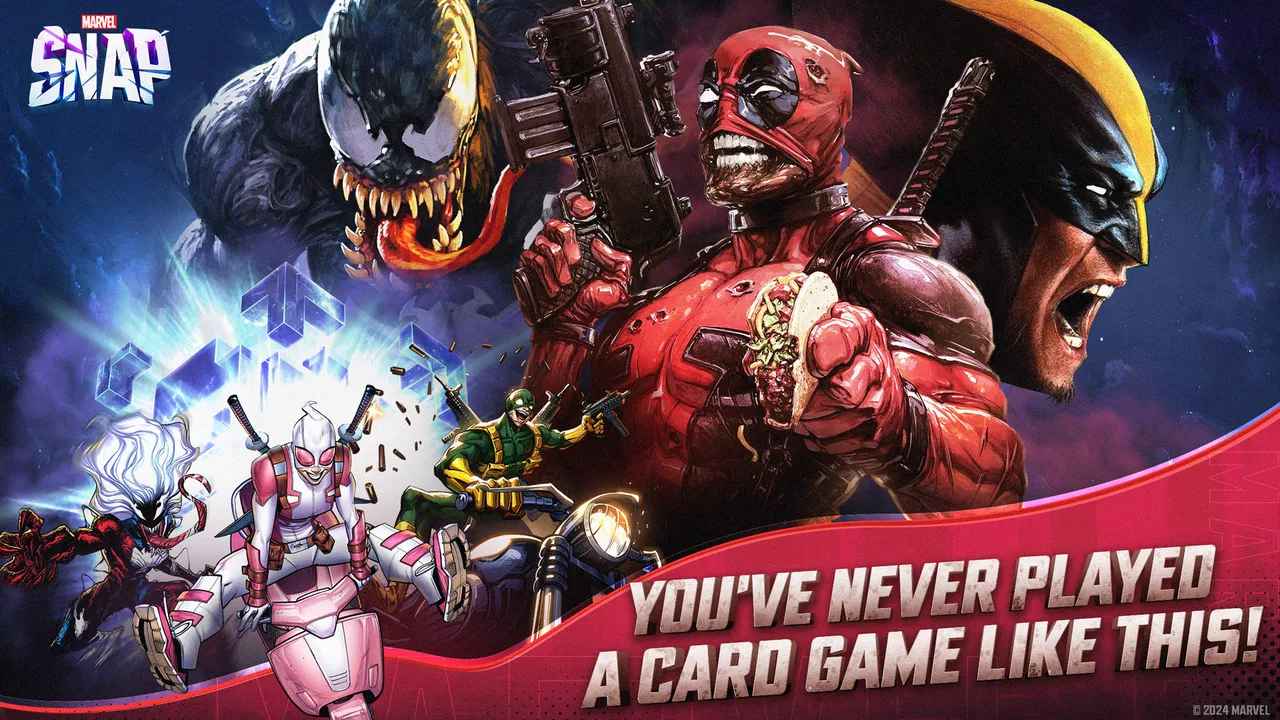
The roster gives the game immediate personality. Recognizing a character makes a card’s role memorable, and the visual presentation helps me remember effects that might otherwise feel abstract. I do not need deep knowledge of every comic storyline to understand the appeal, but longtime Marvel fans will naturally get more enjoyment from seeing familiar characters placed into unexpected tactical situations.
What I like is that the theme does not completely replace strategy. A favorite hero is not automatically the correct choice for every deck, and a less famous character can become essential to a plan. That creates a healthy tension between collecting cards I like and selecting cards that actually support the way I want to play. Players who want every favorite character to be competitive may find that trade-off frustrating.
The game’s Teen content rating also makes its tone clearer: it is aimed at a broad teen and adult audience rather than very young children. The colorful presentation is approachable, but the strategic pressure and collection decisions feel more suitable for someone comfortable with competitive games.
Current accessibility and the collection question
The game is free to start, which makes trying it straightforward. It runs on Android devices using at least version 7.0, so its compatibility reaches older phones and tablets. That does not guarantee identical performance on every device, but the minimum requirement is relatively welcoming for players who are not using the newest hardware.
The larger question is not whether I can begin without paying; it is how comfortable I am with a long-term collection game. In-app purchases range from $0.99 to $99.99 per item, so spending can scale from a small optional purchase to a much more serious commitment. I would advise setting a personal limit before browsing offers. The game is most enjoyable when purchases remain a choice rather than a response to impatience.
Progression also affects how quickly I can assemble a particular style of deck. I cannot assume that the card I want will appear immediately, and that uncertainty is part of the collection experience. For me, this encouraged adaptation: instead of waiting for one ideal list, I learned to improve the deck I could build now. Someone who wants complete control over a competitive collection from the beginning may prefer a different card game with a more direct crafting model.
It is also worth remembering that the game has attracted a substantial audience, with over 10 million installs. That helps explain why matchmaking can feel active, but it also means I should expect opponents who know the common patterns. The beginner experience is friendly at first, yet the learning curve becomes sharper once players begin recognizing familiar deck plans and predicting common final turns.
What has changed and what that means for players
The game was released on October 15, 2022, and the current version is 53.15.12. Those details matter because this is a live product rather than a fixed card box. A player returning after time away should expect the experience to have evolved through ongoing balancing and content decisions, even though I would not treat the version number alone as proof that every personal complaint has been solved.
For an existing player, the practical lesson is to revisit old assumptions. A deck that once felt reliable may no longer fit the current environment, and a card that seemed unimportant may deserve another look after surrounding changes. I found it more productive to test a familiar deck in a few matches than to discard it immediately. This separates a genuine weakness from a temporary run of unfavorable locations or opponents.
New players should avoid copying a high-level deck without understanding its timing. A list can look impressive while remaining difficult to pilot if it depends on recognizing when to retreat, which location to prioritize, or which card to hold for the final turn. I recommend learning one simple deck thoroughly before constantly rebuilding. Familiarity with a modest strategy is more useful than owning several unfinished ideas.
The average rating sits at 3.3 from around 478 thousand ratings, while about 23 thousand written reviews contribute additional player feedback. I read those figures as a sign of a divided experience rather than an automatic verdict. The game has a strong core, but collection pacing, competitive pressure, and monetization can shape whether an individual player enjoys it. My own opinion is similarly mixed in the right way: the matches are excellent, while the surrounding long-term structure requires patience.
Small decisions that improve the experience
My first concrete recommendation is to study locations before thinking about the cards in hand. A strong card played into the wrong place can be weaker than an ordinary card used where the location supports it. I now ask three questions at the start of a match: which location is safest, which one is most volatile, and which one could decide the final turn? That simple scan reduces impulsive plays.
Second, I leave space for uncertainty. When the opponent has not revealed enough information, filling every available position can remove my ability to respond. Keeping one lane flexible or saving an effect for later often gives me more options than maximizing power immediately. This is especially useful for players who come from games where playing every card as soon as possible is usually correct.
Third, I review losses by asking what information I ignored, not only which card defeated me. Sometimes the decisive error happened several turns earlier when I committed to a location without considering the opponent’s likely response. This habit turns short matches into practical lessons and helps prevent the same mistake from feeling random.
Finally, I separate collection goals from match goals. If I am trying to complete a mission or experiment with a character, I accept that the deck may be less efficient. If I am focused on climbing or winning consistently, I use a tighter list and stop changing several cards at once. Changing one or two cards at a time makes it easier to understand whether an adjustment actually helped.
Where the game still creates friction
The compact format can make losses feel abrupt. A single location reveal or final-turn interaction may overturn what looked like a comfortable lead, and that is exciting when I understand the reason. It is less satisfying when I have not yet learned the relevant interaction. The game rewards study, but it does not always make every lesson obvious on the first encounter.
There is also a psychological cost to the wager system. Retreating is strategically correct, yet repeated retreats can feel unsatisfying if I am playing casually. Conversely, staying in a match because I want to see the final result can punish curiosity. Players who prefer a clear win-or-loss structure without risk management may find the central system stressful rather than thrilling.
The collection model can be another barrier. Free access is generous enough to make the first steps inviting, but long-term satisfaction depends on accepting gradual progress and imperfect choices. The specific purchase prices, from small amounts up to $99.99 per item, make budgeting important. I would not recommend spending simply to repair frustration after a losing streak.
Players seeking a traditional, lengthy strategy campaign should also look elsewhere. This game is built around repeated competitive matches, not a story-driven adventure with a fixed sequence of missions. Players who want a board game with completely open information may prefer a more conventional digital strategy title. Here, uncertainty and opponent reading are central rather than occasional complications.
Who should install it, and who should skip it
I think it is a strong fit for Marvel fans who enjoy tactical decisions, for card-game players who want short sessions, and for people who like adapting rather than following one permanent solution. It is particularly good for someone who can enjoy a match even when the result is a lesson. The combination of recognizable characters and compact strategy makes it easy to return to.
I would be more cautious recommending it to anyone who dislikes randomized collection progress, competitive matchmaking, or purchases inside free games. It is also not ideal for a player who becomes irritated by retreating or by losing to an interaction that was not immediately obvious. Those are not minor side details; they are woven into the game’s identity.
Compared with a slower collectible card game, this one asks for less time per match and places more emphasis on location awareness and wagering. Compared with a simple mobile card battler, it offers more room for prediction and deck refinement. Compared with a traditional strategy game, it is easier to start but less transparent because the opponent’s plan is hidden. The best alternative depends on which of those trade-offs bothers or appeals to you.
What I would watch before committing long term
If I were returning after a break, I would watch how comfortable the current card environment feels with my existing collection. I would also pay attention to whether my favorite deck still has a clear plan, rather than judging it by a few unlucky matches. The version number shows active continuity, but the meaningful test for me is whether the evolving environment leaves room for different approaches instead of rewarding only one familiar pattern.
I would keep an eye on my spending habits as well. The free entry point is a genuine advantage, but a collection game can turn small purchases into a regular expense if I do not set boundaries. I prefer treating purchases as optional support for a hobby, never as a requirement for enjoying the next match.
After playing it, I see MARVEL SNAP as a sharp, accessible strategy game with a surprisingly serious decision layer. Its best moments come from reading a location, predicting an opponent, and retreating at exactly the right time. Its weakest moments come from collection friction, unclear losses for newcomers, and the pressure that can surround a free-to-play structure.
My recommendation is positive but specific: try it if you want fast Marvel-themed matches that reward planning, adaptation, and restraint. Start slowly, learn one deck, watch how locations affect your choices, and decide your spending limit before the collection becomes a goal in itself. If you want a relaxed game with no competitive tension or a fully controlled card pool, choose another option. For everyone else, this remains a compelling way to turn a few spare minutes into a genuine strategy challenge.
FAQs for MARVEL SNAP: Hero Strategy CCG
01What is MARVEL SNAP: Hero Strategy CCG?
MARVEL SNAP: Hero Strategy CCG is a fast-paced collectible card game where players build decks using iconic Marvel heroes and villains. The objective is to outsmart your opponent in strategic battles. Players can collect cards, build unique decks, and compete in quick, action-packed matches that last only about three minutes each.
02Is MARVEL SNAP free to play?
Yes, MARVEL SNAP is free to play. However, like many free-to-play games, it offers in-app purchases. These purchases include card packs and other cosmetic items that can enhance gameplay but are not necessary to enjoy the game. Players can progress and compete without spending money, although purchases may speed up the process.
03What platforms is MARVEL SNAP available on?
MARVEL SNAP is available on both Android and iOS platforms, allowing players to enjoy the game on a wide range of smartphones and tablets. The game is designed to be accessible and runs smoothly on most modern devices, providing a seamless gaming experience for all users.
04How does the card collection system work in MARVEL SNAP?
In MARVEL SNAP, players collect cards by playing the game and completing missions. Cards can also be obtained through in-app purchases. Each card represents a Marvel character with unique abilities, and players can build decks to craft their strategy. The collection grows as you play, offering diversity in gameplay.
05Are there any social features in MARVEL SNAP?
Yes, MARVEL SNAP incorporates several social features that enhance the gaming experience. Players can connect with friends, challenge them to matches, and share strategies. The game also features leaderboards and competitive rankings, allowing players to see how they stack up against others globally.
Pros
- Intuitive controls make gameplay easy to learn.
- Unique card mechanics keep matches engaging.
- Stunning artwork enhances visual appeal.
- Regular updates introduce new content.
- Cross-platform sync ensures progress is saved.
Cons
- Occasional connectivity issues can interrupt play.
- Limited deck customization options.
- Some in-app purchases are pricey.
- Matching system can feel unbalanced.
- Requires a constant internet connection.

MARVEL SNAP: Hero Strategy CCG
Gallery